Education partnerships central to prosperity in Southeast Asia
ACER news 24 Jun 2026 4 minute readACER CEO Lisa Rodgers highlights how strong learning foundations and long‑term collaboration can accelerate skills development in Southeast Asia.
Stronger, more resilient futures across Southeast Asia are being built through education, collaboration and shared investment in people. Speaking at the Advancing Transnational Education: Building Skills and Partnerships in Southeast Asia event in Sydney, ACER CEO Lisa Rodgers highlighted how regional partnerships in education are helping to accelerate skills development and opportunity.
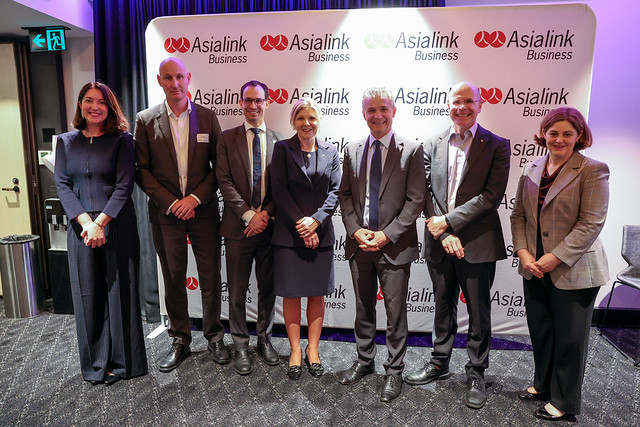
The panel session, hosted for the Australian Department of Foreign Affairs and Trade, brought together senior figures from government, higher education and industry to explore how transnational education can drive workforce development and deepen regional partnerships. Lisa joined a panel featuring The Hon. Matt Thistlethwaite MP, Assistant Minister for Foreign Affairs and Trade; Distinguished Professor George Williams AO, Vice-Chancellor and President of Western Sydney University; Simon Moore, Assistant Secretary at the Department of Education; and Rachel Thompson, Chief Executive Officer of Asialink.
Across Southeast Asia, governments are prioritising workforce development, skills mobility and education reform. Demand is rising for transnational education models that combine academic excellence with practical, job‑ready training, particularly as labour markets rapidly evolve.
Panellists highlighted opportunities for Australian providers to build long‑term partnerships with ministries, universities and industry to address skills shortages. Opportunities span vocational and technical education, higher education collaboration and executive training, supported by growing interest in flexible delivery models.
Lisa drew on ACER’s extensive work across Southeast Asia, where it supports governments through assessment reform, teacher capability development and evidence-based policy design. She noted that countries across the region are investing heavily in workforce development and skills mobility, but that these ambitions depend on strong foundations in literacy, numeracy and problem solving. Without these foundations, higher education, technical and vocational training and job readiness programs cannot achieve the scale or impact required to meet national development goals.
The wide disparities in learning outcomes across the region were also highlighted. Some systems continue to face significant challenges in foundational learning, while others demonstrate world leading performance. Lisa emphasised that addressing these gaps is essential for long-term economic resilience, as inclusive growth depends on education systems that reach all learners.
Australia brings recognised strengths in areas such as assessment, quality assurance, system reform and applied, industry-connected education, but Lisa emphasised that these capabilities only create lasting value when paired with deep contextual understanding, co-design and long-term commitment.
Lisa also reflected on her recent appointment as Australia’s Business Champion for Brunei Darussalam under the Invested: Southeast Asia Economic Strategy to 2040. Developed by Nicholas Moore and supported at the highest levels of the Australian Government, the strategy has become a central part of Australia’s engagement with Southeast Asia and its commitment to deeper regional partnership. The Business Champions initiative is a key part of this agenda, with Lisa’s role focused on strengthening long‑term economic and community connections grounded in trust and capability building and shared regional security.
Brunei has a distinct context within Southeast Asia as a high-income nation with a small population, near-universal literacy, and a strong social welfare system. While the economy continues to benefit from its established oil and gas sector, Brunei is actively advancing efforts to diversify into emerging industries such as aquaculture, green energy, and other sustainable growth sectors. As this transition progresses, strengthening employability, expanding opportunities for local talent, and supporting the evolving needs of industry remain important priorities within Brunei’s long-term development agenda.
Australian tertiary qualifications are highly valued in Brunei, with Lisa highlighting opportunities for vocational education and industry‑aligned training to support the country’s transition.
Lisa offered practical guidance for Australian organisations seeking to expand their presence in Southeast Asia, emphasising that partnerships must be built on trust, mutual benefit and a deep understanding of local context. Over time, these relationships support not only economic resilience, but also the stronger regional cooperation and security that come from long-term partnership.
Lisa closed by reaffirming that education – when grounded in evidence, partnership and respect – strengthens communities, expands opportunity and supports more resilient economies across our region.